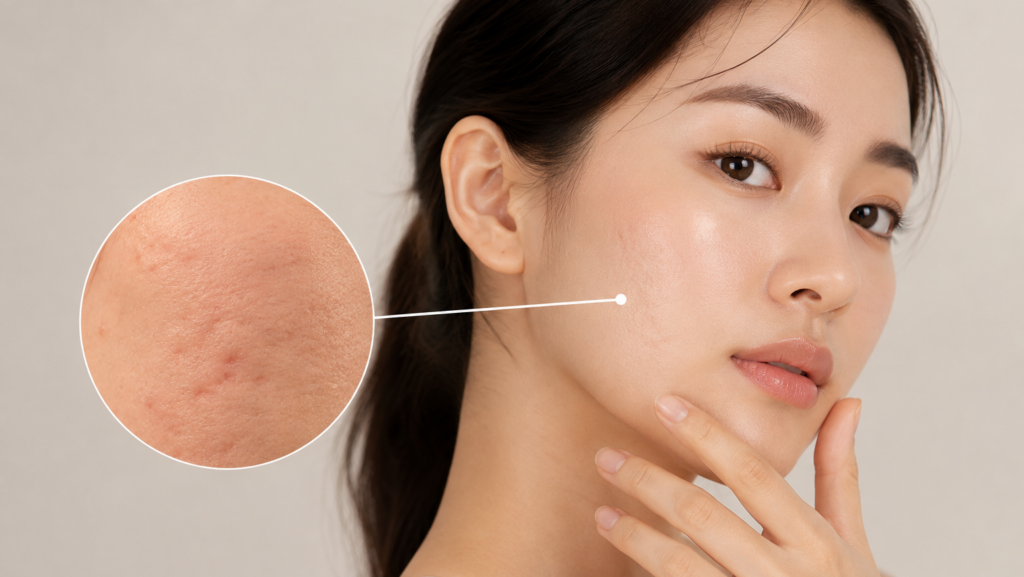
If you've searched "how to get rid of acne scars" and landed on ten different pages each pushing a different miracle treatment, you're not imagining the confusion — acne scars aren't one problem. A deep, narrow ice pick scar and a shallow, wide rolling scar are structurally different injuries to the skin, and they don't respond to the same fix. This guide breaks down what the research actually shows works, where PRP (platelet-rich plasma) treatment genuinely helps, and — just as important — who it's not the right choice for.
- Scar type determines treatment. Rolling and boxcar scars generally respond better to PRP and microneedling; deep ice pick scars usually need a combination approach.
- PRP is genuinely evidence-backed — clinical studies show measurable improvement and higher patient satisfaction versus microneedling or laser alone — but it isn't a single-session miracle. It works through a course of treatments over months.
- PRP is not for everyone. Pregnancy, blood clotting disorders, active infections, and unrealistic expectations for deep scarring are all reasons to look elsewhere first.
- Casablanca delivers PRP through medical-grade microneedling rather than multiple facial injections, which most patients find more comfortable with minimal downtime.
Why acne scars are so hard to "just get rid of"
Acne scarring happens when the skin's healing response over- or under-produces collagen while repairing inflammatory damage from a breakout. Most acne scars are atrophic — depressions where too little collagen was laid down — and they fall into three recognised shapes, each requiring a different treatment logic.
Ice Pick Scars
Narrow, deep, V-shaped pits under 2mm wide that can extend through the full thickness of the skin. The most common atrophic scar type and the hardest to treat because of their depth.
Boxcar Scars
Wider depressions with sharply defined, box-like edges, typically 1.5–4mm across. Shallower than ice pick scars, so they tend to respond better to collagen-building treatments.
Rolling Scars
Broad, wave-like depressions caused by fibrous bands tethering the skin from underneath. The largest in diameter but shallowest — and generally the most responsive scar type to PRP and microneedling.
Understanding which type (or mix of types) you have matters more than which treatment sounds most advanced. This is exactly why a proper in-person skin assessment — not a generic online quiz — should come before committing to any scar treatment plan.
What actually works, ranked by scar type
No single treatment is "best" across the board. Here's how the main evidence-backed options compare for each scar type, based on current clinical guidance and the dermatology literature on atrophic scarring.
| Treatment | Best for | Weaker for | Typical downtime |
|---|---|---|---|
| PRP + Microneedling | Rolling & mild-to-moderate boxcar scars | Deep ice pick scars alone | 24–48 hrs redness |
| Subcision | Rolling scars with tethering | Ice pick, shallow scars | Bruising, several days |
| Laser resurfacing | Boxcar scar edges, overall texture | Very deep ice pick scars | Several days to a week |
| TCA CROSS | Ice pick scars specifically | Broad, shallow scars | Localised scabbing, days |
| Dermal fillers | Temporary lift for shallow boxcar/rolling | Not a permanent fix; needs repeating | Minimal |
Across split-face clinical studies, rolling and boxcar scars consistently show more visible improvement than ice pick scars — regardless of which single treatment is used. If ice pick scars make up most of your scarring, expect your provider to recommend layering PRP or microneedling with subcision or TCA CROSS rather than any one treatment alone.
Where PRP fits: what the research actually shows
PRP therapy uses a small draw of your own blood, spun in a centrifuge to concentrate the platelets and growth factors, then delivered back into the skin to encourage collagen remodelling. It's sometimes nicknamed the "vampire facial" — not the most elegant name, but the mechanism is real biology, not marketing.
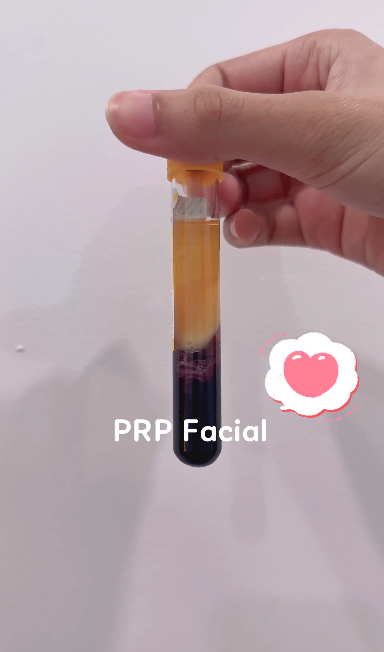
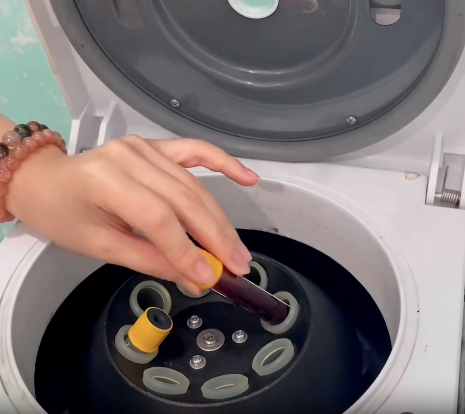
A 2023 overview of systematic reviews pooling 34 individual studies found that clinical improvement and patient satisfaction were significantly higher in patients who received PRP compared to those who didn't — mostly in combination with microneedling or laser treatment. A separate systematic review in the Journal of the American Academy of Dermatology found that PRP combined with fractional ablative laser over 2–3 sessions, spaced about a month apart, measurably improved the appearance of acne scars.
In a head-to-head trial, PRP performed significantly better than 50% TCA CROSS — a chemical scar treatment — in reducing atrophic acne scars over three months. And a prospective study of 30 patients receiving six monthly PRP sessions found that half showed a full grade of improvement on a standard acne scar severity scale — with rolling scars responding notably better than boxcar or ice pick types, consistent with the pattern above.
Reviewers rate the overall certainty of this evidence as low to moderate — not because PRP doesn't work, but because study designs vary widely in quality across the field. One well-designed split-face trial even found that normal saline injections produced similar improvement rates to PRP, raising a genuinely interesting question: how much of the benefit comes from the growth factors themselves, versus the mechanical effect of the microneedling or injection process stimulating the skin? The honest answer is probably both. This is exactly the kind of nuance a page promising "PRP erases your scars" won't tell you.
Why Casablanca delivers PRP through microneedling, not injections
Conventional PRP protocols often use multiple facial injections. At Casablanca, PRP is delivered through medical-grade microneedling instead — the microneedles create thousands of tiny channels that distribute the plasma evenly across the treatment area, rather than concentrating it at individual injection points. This tends to be more comfortable, and the combination of microneedling plus PRP has its own supporting evidence: a 2024 scoping review found that microneedling combined with PRP produced more consistent improvement in acne scars than microneedling alone, with greater collagen deposition observed on histology.
General educational video illustrating the PRP + microneedling process — not filmed at Casablanca.
What the benefits actually look like
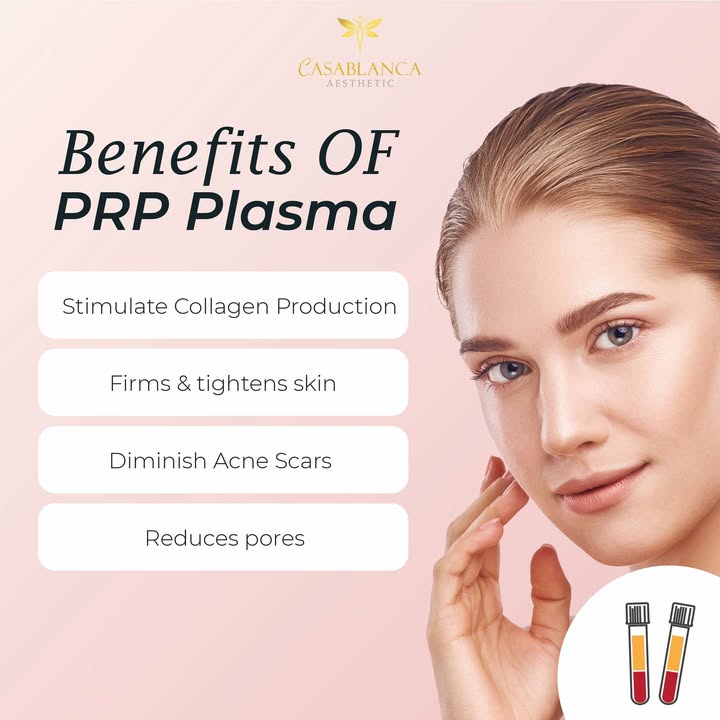
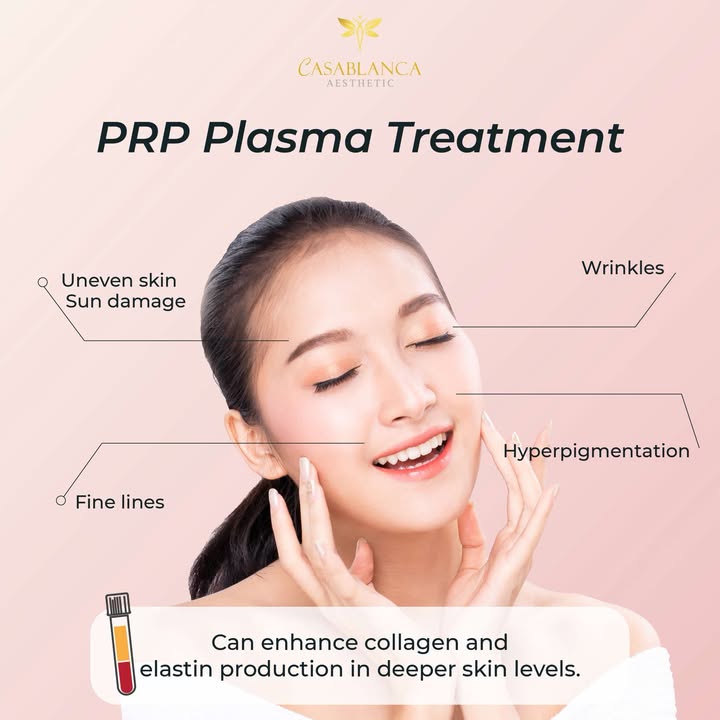
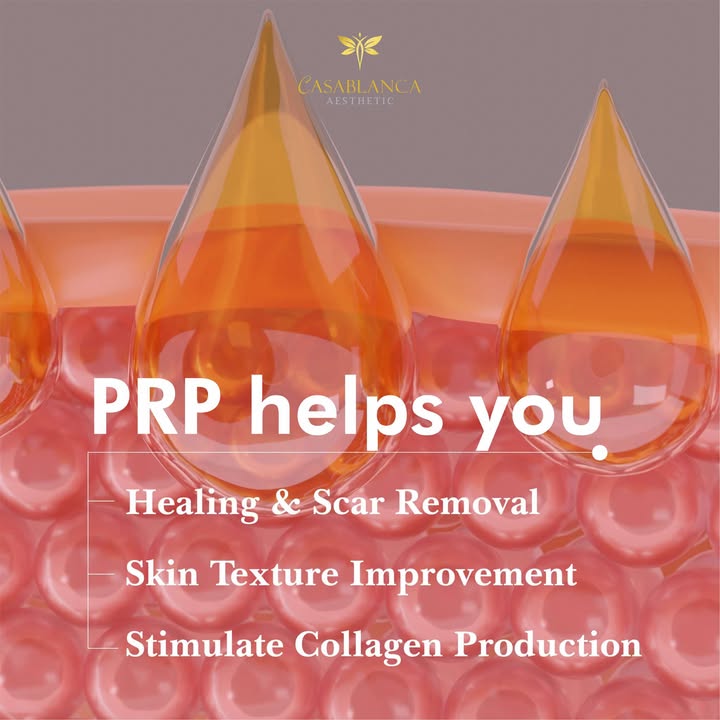
Real results from Casablanca clients
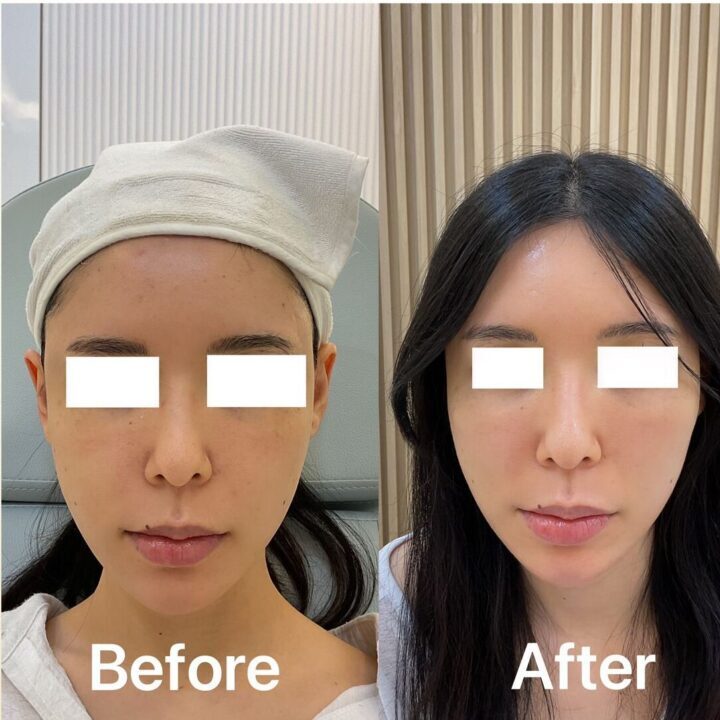
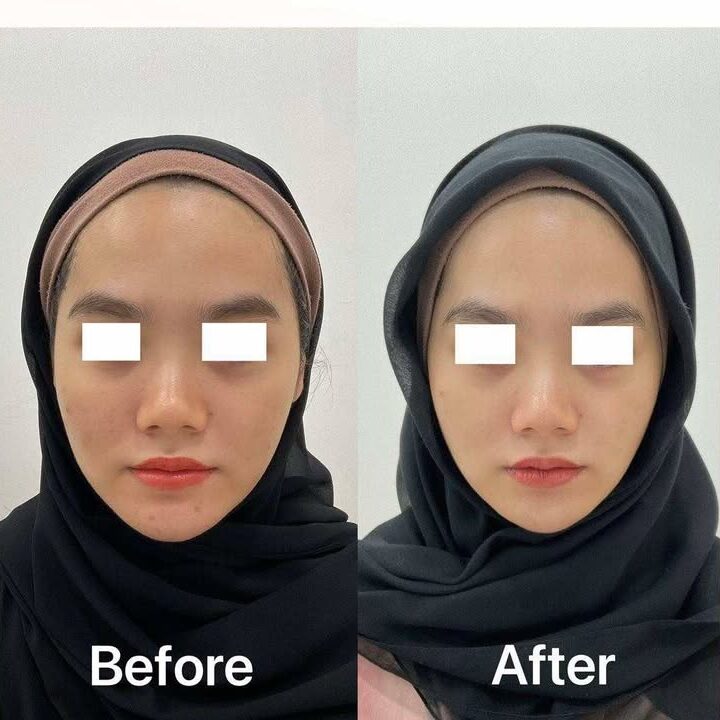
Individual results vary depending on scar type, severity, and number of sessions completed. Shown with client consent.
Who PRP is NOT for
This is the part most clinic websites skip. PRP is generally not recommended if any of the following apply:
- Pregnant or breastfeeding
- On blood-thinning medication, or have a diagnosed blood clotting disorder
- Experiencing active skin infection or active, severe inflammatory acne in the treatment area
- Prone to keloid scarring
- Expecting one session to erase deep ice pick scars — PRP alone typically shows less improvement here than on rolling or boxcar scars, per the clinical evidence above
If any of these apply to you, that's not a dead end — it just means a proper consultation should steer you toward a different modality (or a combination approach) rather than PRP as a first step. This candour is deliberate: recommending the wrong treatment to close a sale is a bad outcome for everyone, including the clinic's own reputation.
How many sessions, and how fast will I see results?
Clinical studies on PRP for acne scars typically use a course of multiple sessions spaced roughly a month apart rather than a single visit, with improvement assessed months after the final sitting. Results build gradually as your body lays down new collagen — there's no treatment, PRP included, that visibly resolves scarring overnight.
What doesn't move the needle (and why)
A few things worth being upfront about, since they come up constantly:
- At-home derma rollers don't puncture deep enough to meaningfully affect atrophic scarring, and carry a real risk of skin irritation or infection when not performed under clinical, sterile conditions.
- Spot-treating with acids alone can improve surface texture and pigmentation but doesn't rebuild the lost collagen that gives atrophic scars their depth.
- A single session of anything — PRP, laser, or otherwise — is very unlikely to produce a dramatic result. The clinical studies behind every treatment in the comparison table above used multiple sessions, not one.
How Casablanca approaches acne scar treatment
PRP at Casablanca starts with an in-person skin assessment to identify which scar types you actually have — since, as covered above, that's the single biggest factor in what treatment plan makes sense. From there, PRP is delivered via medical-grade microneedling rather than injections, in 45–60 minute sessions with minimal downtime. If your scarring is a mixed presentation (which is common), PRP may be recommended alongside other approaches rather than as a standalone fix.
First-Trial PRP Face Treatment
1-hour session · Skin consultation · PRP extraction · Microneedling delivery · Post-treatment care
RM149 First Trial
Book Your Consultation →Frequently Asked Questions
What actually gets rid of acne scars?
Nothing erases acne scars completely, but treatments that trigger new collagen production — PRP, microneedling, laser resurfacing, and subcision — can meaningfully soften their appearance. Which one works best depends on scar type: rolling and boxcar scars respond well to collagen-stimulating treatments like PRP microneedling, while deep ice pick scars usually need a combination approach.
Is PRP actually effective for acne scars, or is it hype?
Multiple clinical studies show PRP produces measurable improvement in acne scars, especially combined with microneedling or laser treatment, with patient satisfaction consistently rated higher than microneedling or laser alone. That said, the certainty of this evidence is rated low to moderate by reviewers — so PRP is a genuinely helpful tool, not a guaranteed fix.
Does PRP work on ice pick scars?
Ice pick scars are the hardest scar type to treat because they're deep, narrow, and can extend through the full thickness of the skin. PRP alone tends to show less improvement here versus rolling or boxcar scars. Most clinics recommend combining PRP with subcision or TCA CROSS for ice pick scars rather than relying on PRP by itself.
Who should NOT get PRP treatment?
PRP is generally not recommended for pregnant or breastfeeding individuals, people with blood clotting disorders or on blood-thinning medication, anyone with active skin infections or severe active acne in the treatment area, and those with a history of keloid scarring. It's also not right for someone expecting one session to erase deep ice pick scars.
How many PRP sessions do I need for acne scars?
Clinical studies typically use a course of 3 to 6 sessions spaced 2 to 4 weeks apart, rather than a single treatment. Results build gradually as collagen remodels over the following weeks, with improvement continuing for months after the final session.
Is PRP painful and is there downtime?
Casablanca delivers PRP through medical-grade microneedling rather than multiple facial injections, which most patients find more comfortable than injection-based PRP. Expect mild discomfort during the session and redness or slight swelling for 24–48 hours afterward.
How much does PRP for acne scars cost in Malaysia?
At Casablanca Aesthetic in KL and PJ, a first-trial PRP Face Treatment is RM149 for a 1-hour session including consultation, PRP extraction, microneedling delivery, and post-treatment care. A full course for acne scars is usually quoted after an in-person skin assessment, since it depends on scar severity and type.
Can PRP be combined with other acne scar treatments?
Yes. PRP is frequently combined with laser resurfacing, subcision, or other microneedling protocols for enhanced results, particularly for deeper or mixed scar presentations where a single modality isn't enough.
This article is intended as an educational guide and does not constitute medical advice. Scar type, severity, and individual healing response all affect suitability and results. Always consult a qualified skin specialist before starting any acne scar treatment plan. Last updated: July 2026.